






 Regenerate cartridges
References
Mobile Ultrapure Water System
Water treatment for mobile treatment units
In field hospitals and temporary hospital solutions: HP Medizintechnik and EnviroFALK are jointly setting new standards in the reprocessing of medical devices.
Security of supply in the absence of existing infrastructure
How can the safe reprocessing of medical devices be ensured when permanent structures are lacking, such as in the event of emergencies and temporary solutions in hospital operations or in crisis regions and field hospitals? The solution: mobile reprocessing units based on a modular system, individually adapted to the respective requirements and on-site conditions.
A central element of this is the self-sufficient supply of treated water, which is essential for the standards-compliant cleaning, disinfection, and sterilization of medical devices. EnviroFALK provides precisely tailored water treatment systems for this purpose, which can be seamlessly integrated even in minimal space conditions and reliably deliver the required water quality even under extreme operating conditions.
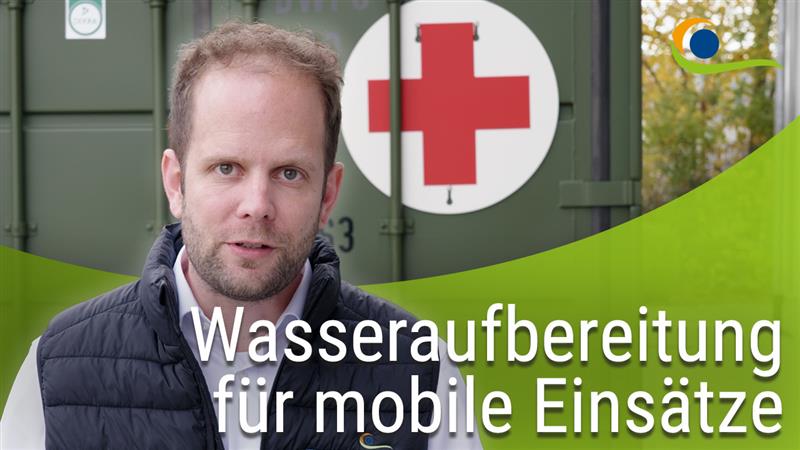
Areas of application for mobile medical device reprocessing units
With more than 50 years of experience in the manufacture of laboratory and medical technology equipment, HP Medizintechnik is also one of the internationally leading providers of mobile medical device reprocessing units.
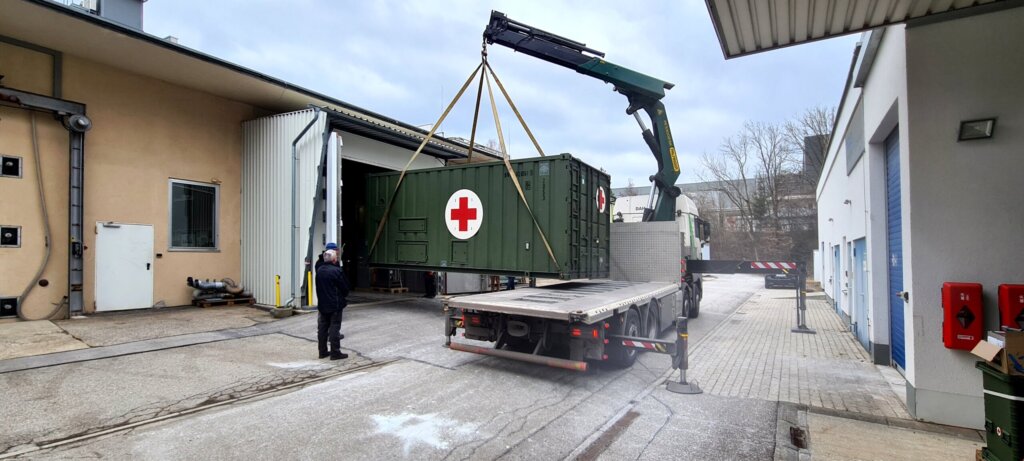
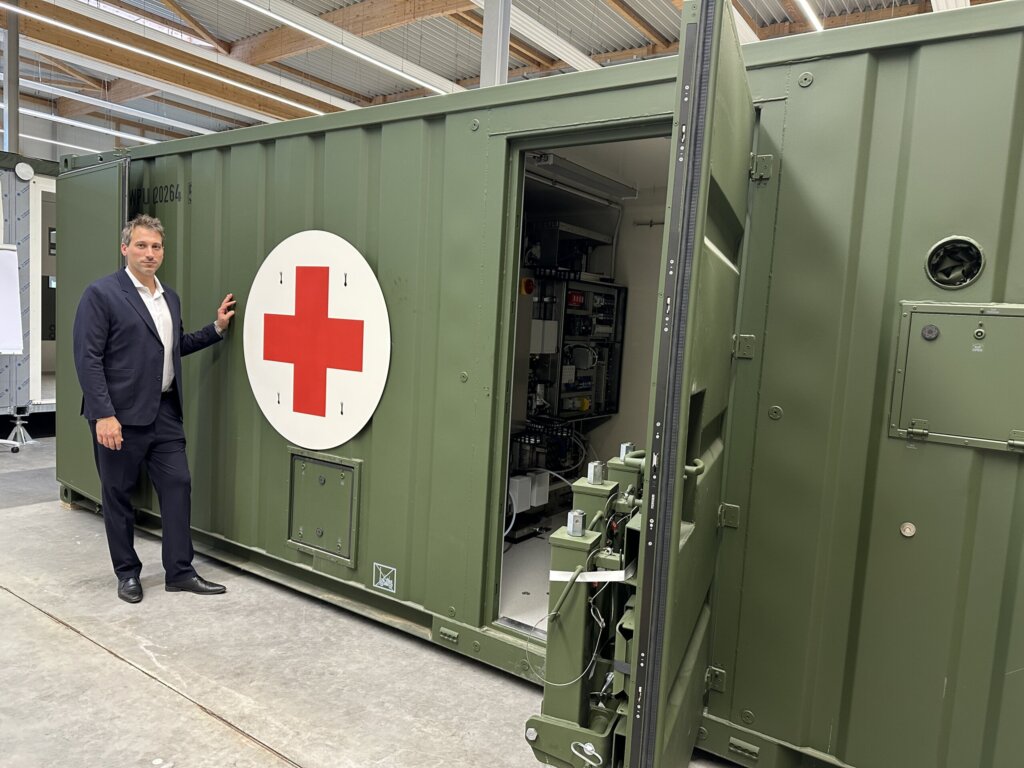
The modular units, designed as container- and tent-based systems, are specifically developed for use in crisis and disaster areas. They are deployed wherever medical care must be ensured under the most challenging conditions—such as in crisis regions like Mali and Afghanistan, as well as during natural disasters including tsunamis and earthquakes.
The requirements are immense: extreme temperatures, dust, remote deployment locations, difficult transport routes, and the constant need for rapid assembly and disassembly demand particularly robust and compact systems. As a result, these mobile units make a decisive contribution worldwide to the hygienically safe reprocessing of medical devices—whether for armed forces, in field hospitals, during humanitarian missions by non-governmental organizations (NGOs), or as a rapidly available temporary solution in civilian hospitals and clinics.
The key role of water treatment
Treated water is essential for the standards-compliant cleaning, disinfection, and sterilization of medical devices. This includes fully demineralized water (DM water), purified water, and ultrapure water. EnviroFALK has aligned itself with these specific requirements and developed compact water treatment systems that can be integrated into mobile systems even under the tightest space constraints. As a result, water treatment assumes a central role in supplying washer-disinfectors, ultrasonic cleaning units, sterilizers, and steam generators. All of these devices require treated water that meets the strictest hygiene guidelines and standards, such as DIN EN ISO 15883 for washer-disinfectors and DIN EN 285 for steam sterilizers. These standards define clear requirements for water quality.
EnviroFALK’s water treatment systems meet precisely these requirements. All necessary treatment stages—from pre-filtration and reverse osmosis to final demineralization using ion exchangers—are integrated in a space-saving undercounter module. Modern sensor technology, a robust touch display, and durable PPH piping ensure that the water treatment technology operates reliably even under extreme conditions.
The HP Medizintechnik GmbH develops, manufactures, and distributes equipment for laboratory, analytical, and medical applications. Based in Oberschleißheim near Munich, the company has more than 50 years of experience and expertise, as well as an optimized development and manufacturing structure for all types of laboratory and medical products.
In addition, HP Medizintechnik is one of the internationally leading manufacturers of flexible, standards-compliant reprocessing units for medical devices (AEMPs) designed for mobile deployment in tent and container constructions. These units are primarily used by armed forces and non-governmental organizations (NGOs) in disaster, war, and crisis situations, as well as worldwide as interim solutions for civilian hospitals.
Military requirements and testing
The mobile reprocessing units from HP Medizintechnik are air-conditioned to ensure safe and stable operation on site even under extreme conditions. They must be transported over long distances and regularly assembled and dismantled. In addition, they must withstand vibrations and operate reliably at ambient temperatures ranging from −10 °C to +70 °C. Each deployment presents new challenges that require individual adaptation.
Before a mobile reprocessing unit leaves the factory, it undergoes a multi-stage stress testing program in accordance with the NATO standard AECTP 300. An independent testing laboratory supervises tests that simulate real storage and transport conditions. These include 24 hours at temperatures as low as −32 °C to verify frost resistance, hot and dry phases up to +71 °C to replicate aging processes, and warm, humid climate scenarios to assess corrosion resistance. The high-temperature test sequences extend over several weeks with repeated heating and cooling cycles. Only once the systems have successfully passed these stresses and subsequently function flawlessly from a technical standpoint are they approved for release.

Dipl. - Ing. Sandro Schmalzl
Managing Director of HP Medizintechnik
“Mobile reprocessing units are in no way inferior to stationary systems. On the contrary, due to the extensive testing they are often even more reliable.”
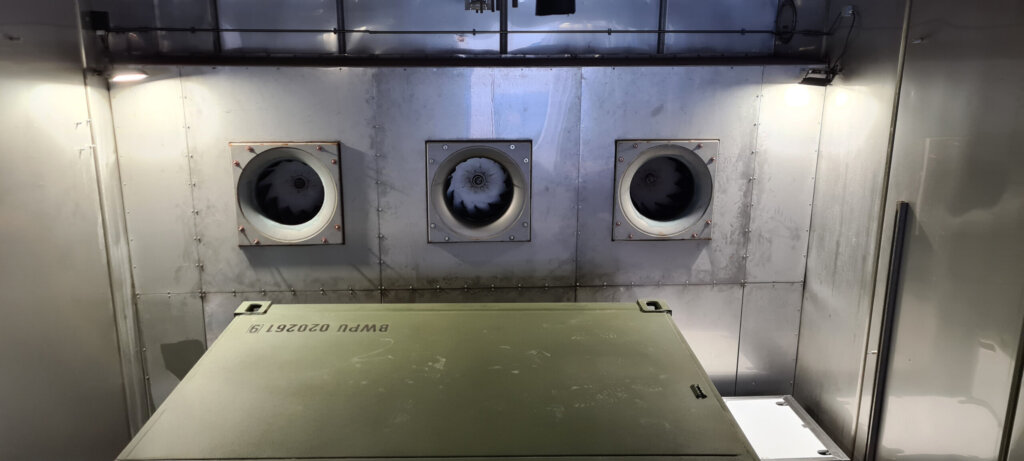
The mobile reprocessing unit is subjected to a multi-stage stress testing program in a climate chamber in accordance with the NATO standard AECTP 300.
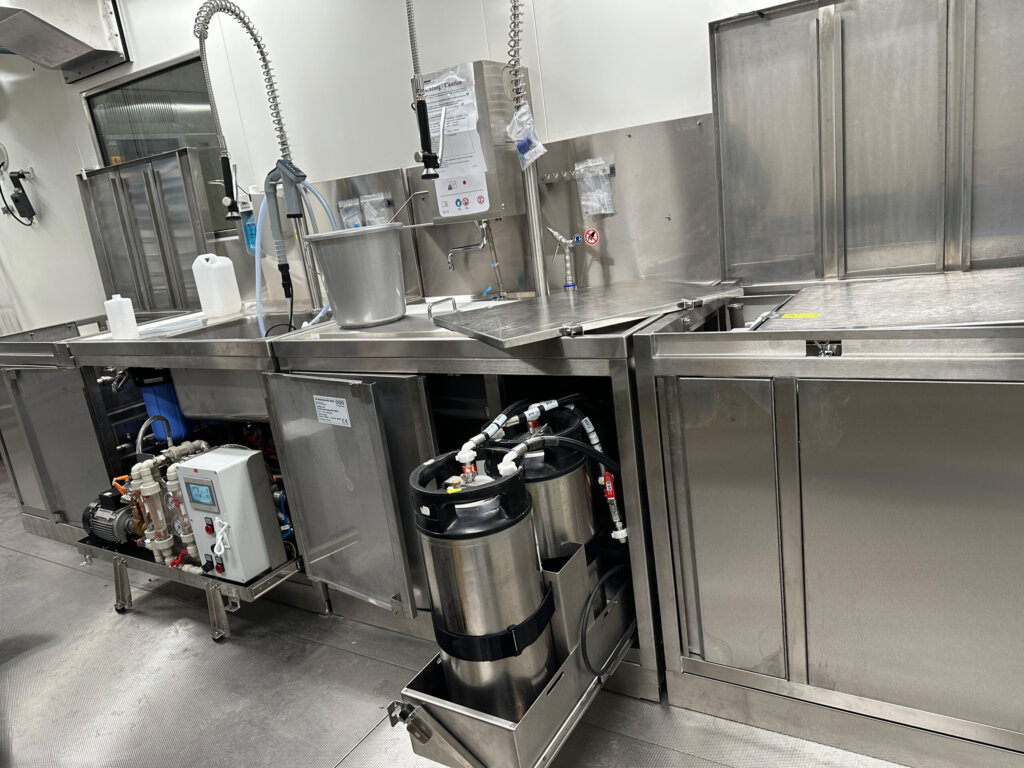
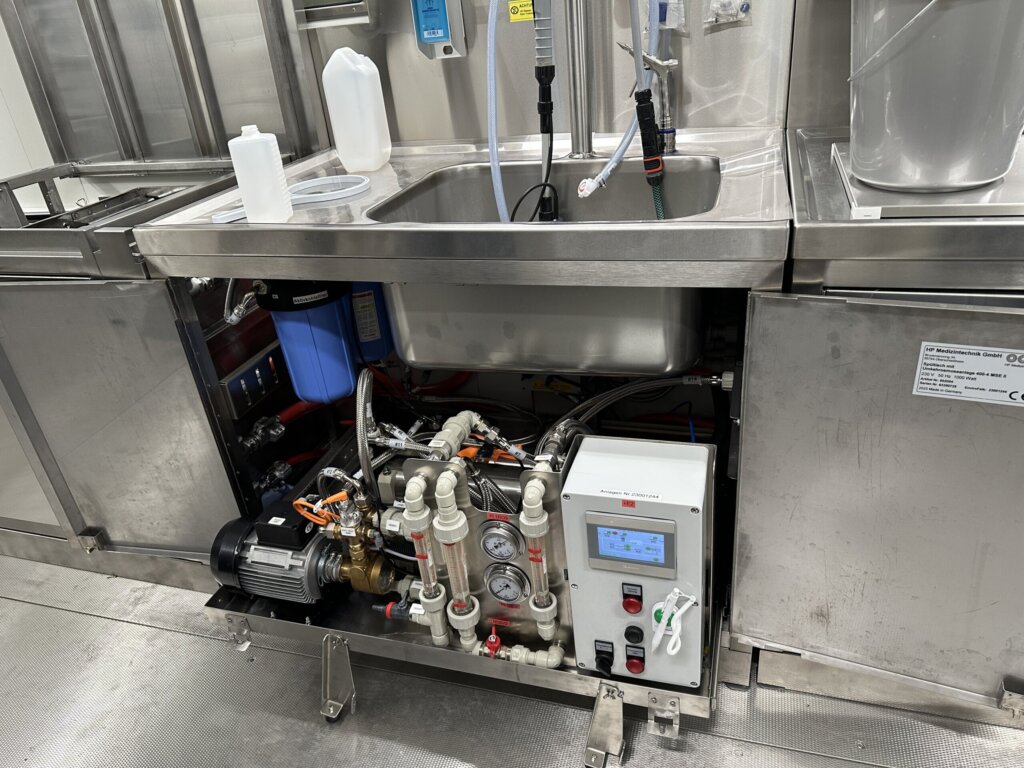
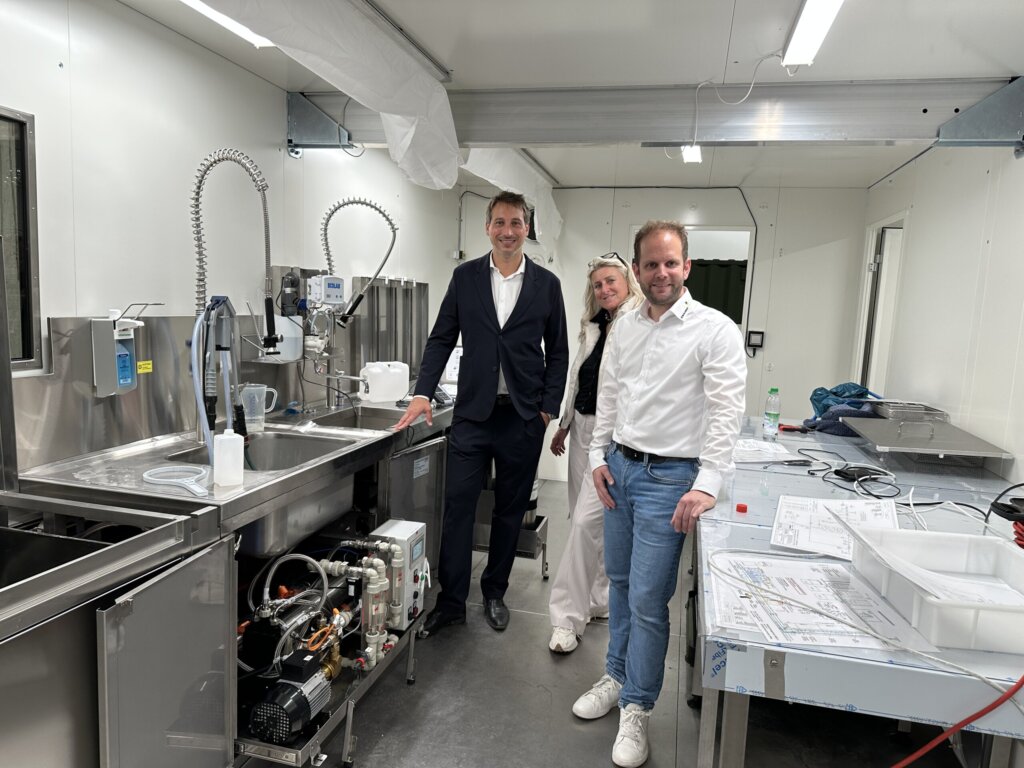
Compact water treatment by EnviroFALK: all treatment stages, from pre-filtration and reverse osmosis to final demineralization via ion exchangers, are integrated in a space-saving undercounter module.
Sustainability and security of supply
The mobile reprocessing units are not only robust and compact, but are also designed for long-term security of supply. Thanks to their modular design and self-sufficient water treatment, they can be operated independently of local infrastructure. This ensures a reliable supply even in regions without secure medical care.
Cleaning of medical devices
Medical devices that must be reprocessed after each use include not only surgical instruments such as scalpels, but also complex devices such as endoscopes or ultrasound probes. In addition, this includes surgical scissors, clamps, forceps, drills, implantation instruments, as well as instruments for minimally invasive procedures. Cleaning is carried out in sterilizers, autoclaves, ultrasonic baths, and washer-disinfectors (WDs), which are supplied with treated water.
The reliable reprocessing of these products is crucial for patient safety during medical procedures and examinations, regardless of whether they take place in a fully equipped hospital or under extreme conditions in a field hospital.
“Made in Germany” partnership
Quality and joint development
The collaboration between HP Medizintechnik and EnviroFALK has been based for many years on trust, professionalism, and innovative strength. Both companies develop and manufacture their systems in Germany, a clear commitment to quality, safety, and sustainability.
As part of this partnership, the water treatment systems for mobile reprocessing units have been continuously improved and further developed. The goal has been to achieve the highest possible level of hygiene, flexibility, and reliability—even under extreme operating conditions.
Customized solutions instead of standard systems
The development of mobile reprocessing units requires a shift in thinking: while stationary systems remain in operation for decades without change, mobile systems must be transported regularly and repeatedly assembled and dismantled. They must withstand vibrations and operate reliably under a wide range of temperature conditions. Each deployment brings new requirements, ranging from difficult transport routes to extreme climatic conditions.
Therefore, the development of water treatment systems for mobile reprocessing units requires a close coordination process. From the initial concept phase through design to final implementation, every detail was jointly planned by EnviroFALK and HP Medizintechnik. The particular challenge was to design compact, robust, and fail-safe water treatment systems that operate reliably even under extreme climatic and logistical conditions.

Sascha Reßmann
Sales Manager for Water Treatment for Hospitals & Laboratories at EnviroFALK
“Over weeks and months, the concept was developed, tested, and optimized with the aim of ensuring the highest water quality in the smallest possible space. The result is water treatment systems that are technically convincing and meet the requirements for hygiene, flexibility, and operational reliability.”
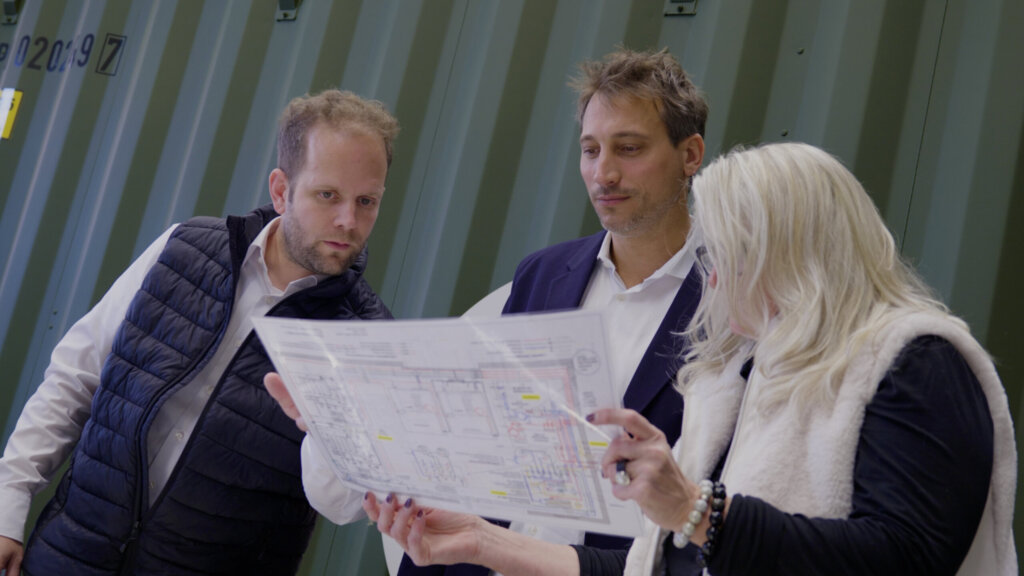
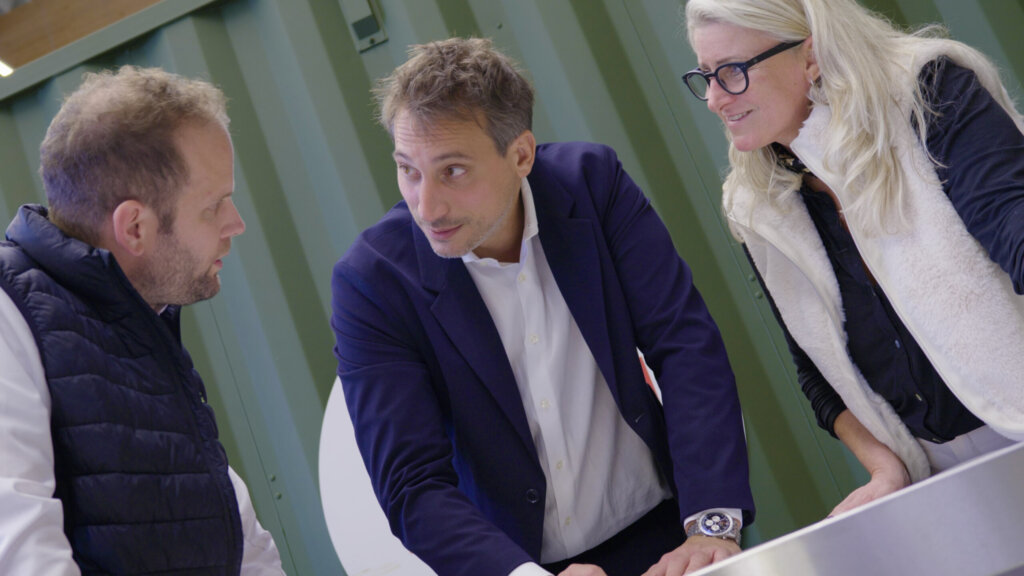
Planned together: the development of water treatment systems for mobile reprocessing units requires close coordination processes. From the concept phase through design to implementation, EnviroFALK and HP Medizintechnik precisely coordinated every detail.
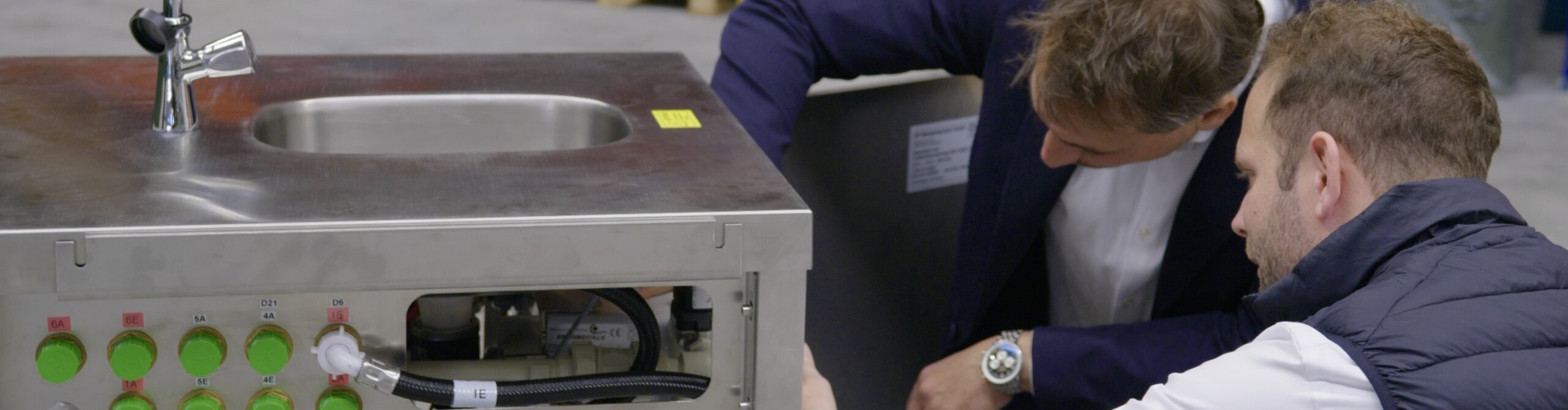
Reliable water treatment for interim solutions in hospitals or under extreme conditions in field hospitals.
Many years of experience in complex projects
Over the past ten years, HP Medizintechnik and EnviroFALK have jointly реализiert numerous complex projects. These include mobile reprocessing systems for the German Armed Forces in tent-based systems, container-based solutions for international deployments, and the integration of water treatment systems on the largest naval vessel of the German Armed Forces, taking ABC protection requirements into account. These projects highlight both companies’ ability to develop solutions for a wide range of deployment scenarios—from military applications to interim solutions in civilian hospitals.
Ease of maintenance and staff training
The reliability of mobile reprocessing units depends not only on the technology, but also on the safe handling by personnel. For this reason, ease of maintenance plays a central role. All reprocessing units are designed to be easily accessible and simple to maintain, even under challenging deployment conditions.
Equally important is staff training. The operation, maintenance, and disinfection of the water treatment system and all downstream medical devices must be possible without direct support, for example by soldiers in deployment areas. For this reason, all processes are documented in detail and supplemented by practice-oriented training. This ensures that the mobile reprocessing units operate reliably at all times.
From crisis deployment to hospital use: safe water treatment for medical devices
Whether in hospitals, during emergencies, or in deployments of the German Armed Forces, mobile reprocessing units for medical devices must operate reliably under all conditions. EnviroFALK’s water treatment systems form the core component in this context. They ensure hygienic supply and enable medical care wherever it is needed.
The partnership between HP Medizintechnik and EnviroFALK impressively demonstrates what is possible when technical expertise, innovative spirit, and a sense of responsibility come together: solutions that provide the highest level of safety today while being prepared for the challenges of tomorrow.
FAQ
Treated water is essential for the safe cleaning, disinfection, and sterilization of medical devices. Only demineralized, purified, or ultrapure water meets the hygienic requirements of applicable standards and ensures patient safety.
Mobile reprocessing units are used wherever permanent hospital infrastructure is lacking or needs to be temporarily replaced—such as in field hospitals, crisis and disaster areas, during humanitarian missions, military deployments, or as interim solutions in hospital operations.
The systems provide fully demineralized water (DM water), purified water, and ultrapure water, precisely tailored to the requirements of washer-disinfectors, ultrasonic devices, sterilizers, and steam generators.
Yes. EnviroFALK’s water treatment systems meet, among others, the requirements of DIN EN ISO 15883 (washer-disinfectors) as well as DIN EN 285 (steam sterilizers).
Absolutely. The mobile reprocessing units are designed for extreme temperatures, vibrations, and challenging transport conditions and are tested in accordance with the NATO standard AECTP 300.
Thanks to their modular design and integrated water treatment, the systems can be operated independently of local infrastructure—an essential advantage in crisis regions and emergency interim solutions.
These include surgical instruments such as scalpels, scissors, clamps, and forceps, as well as complex medical devices such as endoscopes, ultrasound probes, and instruments for minimally invasive procedures.
Both companies develop and manufacture their systems in Germany. Their long-standing partnership stands for quality, innovative strength, customized solutions, and the highest level of operational reliability—even under extreme conditions.
Yes. To ensure safe operation, operating procedures, maintenance, and hygiene processes are documented in detail and supplemented with practical training—even for deployments without on-site technical support.
 powered by