





 Regenerate cartridges
References
Water treatment for the glass industry
When water determines coating quality
How a purified-water recirculation system defines process stability in glass coating at Saint-Gobain Glass Germany
In highly sensitive coating processes in the flat-glass industry, even minor variations in water quality can have a significant impact on product quality and reject rates. A system modernisation at the Saint-Gobain Glass Germany site in Cologne-Porz demonstrates how modern purified-water recirculation systems combine transparency, stability and resource efficiency.
Ihr Ansprechpartner

An underestimated factor in flat-glass finishing
The requirements for coated flat glass are continually increasing. Applications range from energy-efficient façades and complex insulating-glass solutions to design-oriented interior solutions. Alongside high quality standards, economical and resource-efficient production processes are increasingly coming into focus.
Magnetron coating lines, on which functional metal and metal-oxide layers are applied, are a key technology. The process windows are narrow: even minimal deviations in individual parameters can directly affect coating quality.
An important and often underestimated influencing factor is the quality of the process water used in the upstream glass-washing process.
Cologne-Porz site: continuity and ongoing development
SaintGobain Glass Deutschland GmbH is one of the leading manufacturers of flat-glass solutions and part of the international SaintGobain Group. High-quality multifunctional glass for construction applications and specialist markets has been produced at the long-established Cologne-Porz site for more than 125 years.
Alongside technological excellence, sustainability is a particular focus. Raw materials are systematically kept in circulation, including through the recycling of production rejects and processed insulating glass from renovation and dismantling projects. These materials are separated, cleaned and returned to the melting process. In coating in particular, however, one thing is clear: resource efficiency and product quality are inextricably linked.
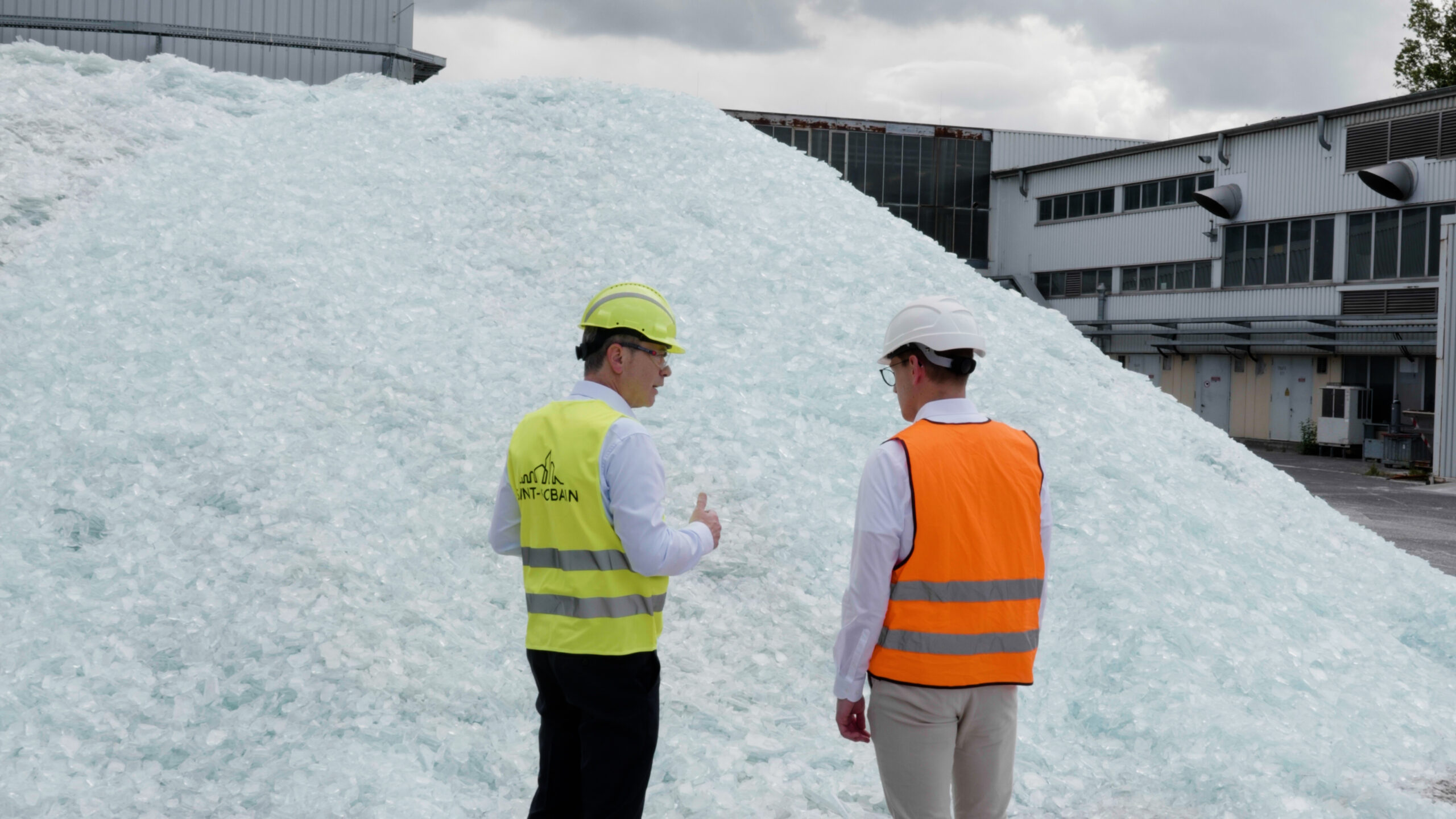
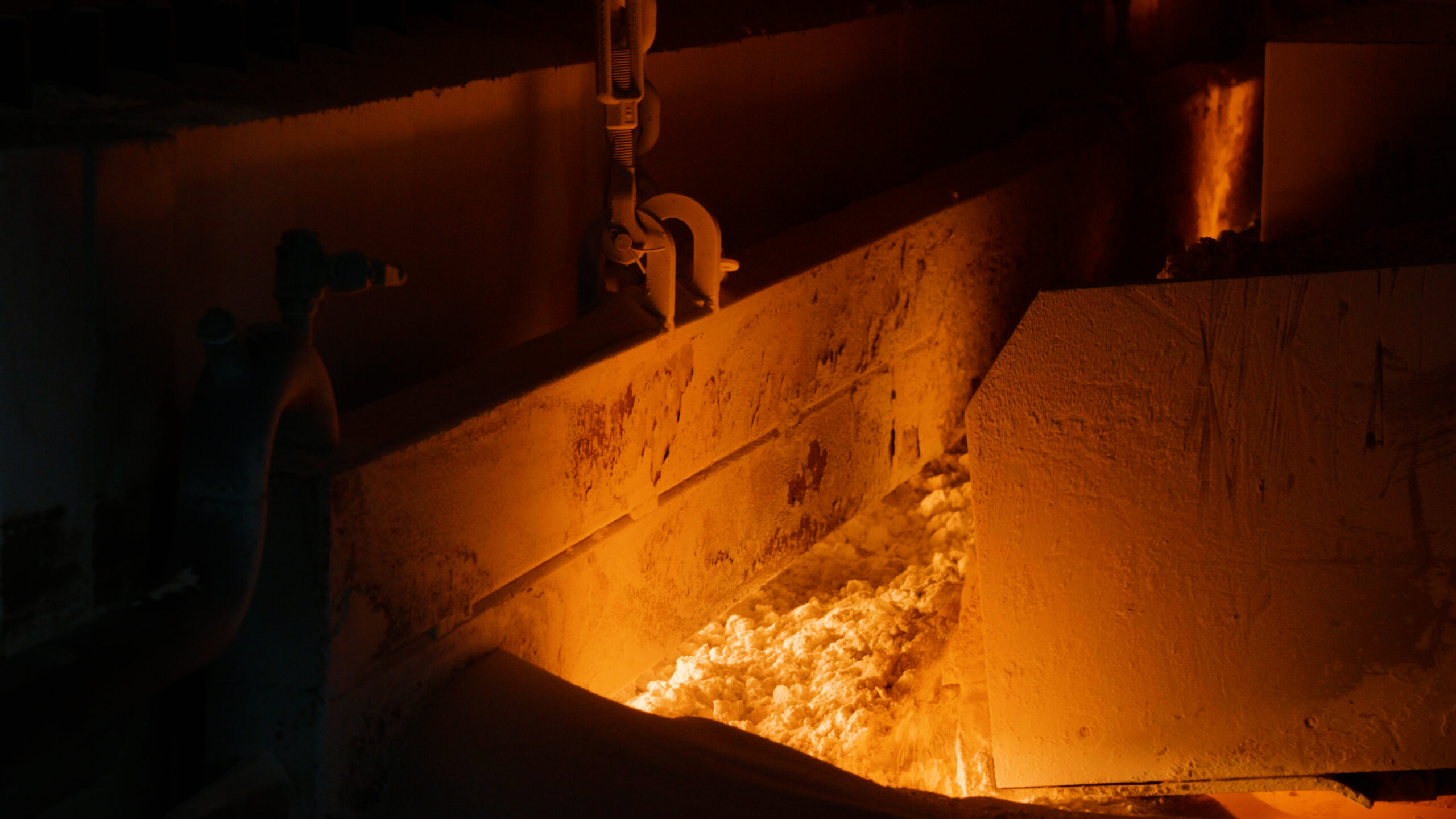
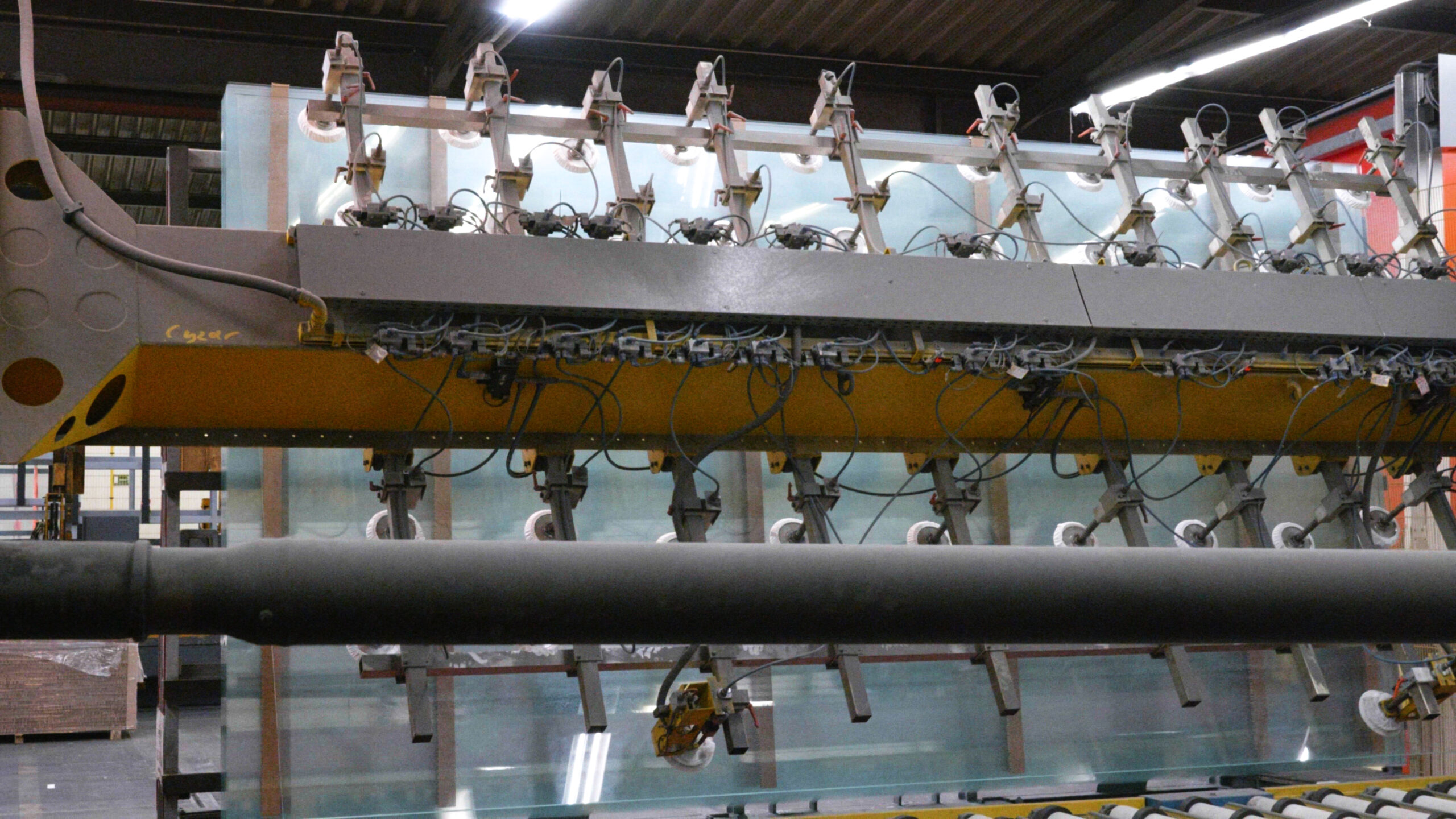
Image 1: Recycling of production rejects and processed insulating glass. Image 2: Float-glass furnace, the heart of glass production. Image 3: Automated processes for glass sizes of every dimension.
Water as a critical process parameter
Coating quality depends to a large extent on stable process conditions. Cleaning the glass before coating plays a central role: only completely clean surfaces allow standardised layer deposition. Even minor contamination or fluctuations in water quality can impair the coating’s adhesion and optical properties. Water is therefore no longer merely an auxiliary material, but a decisive process parameter.
The interaction between water treatment and washing technology is crucial. Only precise coordination of the two systems ensures that the required water quality is consistently achieved throughout the entire process. While water treatment defines and maintains the necessary quality parameters—such as conductivity, freedom from particles and organic load—the washing technology ensures their reliable implementation at the component surface. Mechanical, chemical and hydraulic effects work together and must be precisely coordinated. In practice, reproducible results, low reject rates and stable coating processes over the long term can only be ensured when both components are viewed and operated as an integrated overall system.
Dipl.-Ing. Guido Sistermann
Head of Engineering, SaintGobain Glass Germany
Saint-Gobain Glass Deutschland is part of the international Saint-Gobain Group and ranks among the leading providers of high-quality glass solutions for the construction and architecture sectors. The company develops, manufactures and markets innovative glazing systems for windows, façades and interior construction. Its focus is on energy-efficient, sustainable, high-performance glass that combines comfort, safety and design. With modern production sites, extensive research expertise and a strong commitment to sustainable construction, Saint-Gobain Glass supports customers worldwide in delivering demanding building projects. In doing so, the company pursues the Group vision „Making the World a Better Home“.
When established systems reach their limits
The existing water-treatment system at the Cologne-Porz site had operated reliably for many years and was continuously developed by EnviroFALK. As requirements increased, however, so did the need for greater transparency and targeted process control.
The objective was a modern solution in line with Industrie 4.0, offering end-to-end process and data transparency as well as the ability to monitor and control every system stage in real time.
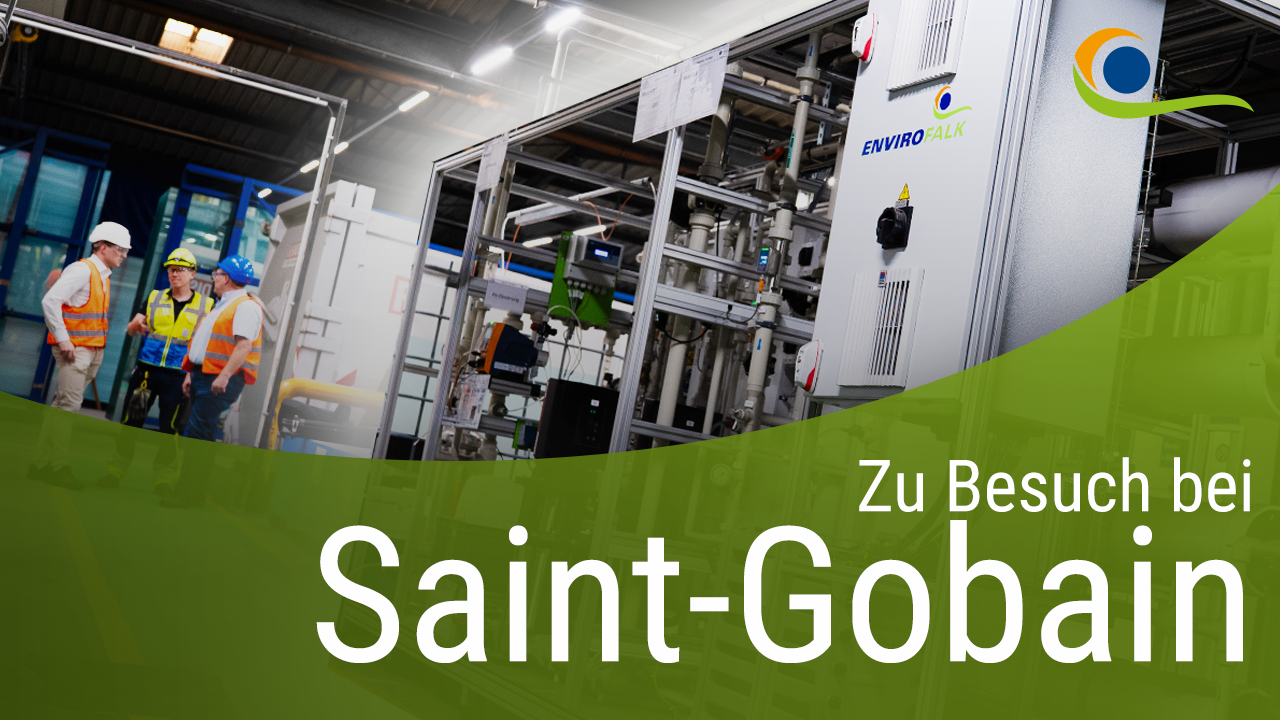
Together with EnviroFALK, a purified-water recirculation system was developed specifically to meet these requirements. Today, all relevant process stages are centrally monitored and visualised in real time.
Multi-stage water treatment in a closed loop
Reliable purified-water production
Purified water is produced through a clearly structured, multi-stage process within a closed-loop system. The aim is to deliver consistently high, reproducible water quality that meets the requirements of the coating processes.
Water-treatment processes
In this case, the first step is to filter the well water in order to reliably remove particulate contaminants. Further treatment then takes place across several coordinated process stages: softening reduces hardness-forming substances and protects downstream system components, while reverse osmosis (RO) performs the main desalination step. Subsequent electrodeionisation (EDI) provides polishing demineralisation, resulting in very low conductivity levels. Downstream storage in sloping tanks with UV disinfection ensures the microbiological stability of the purified water.
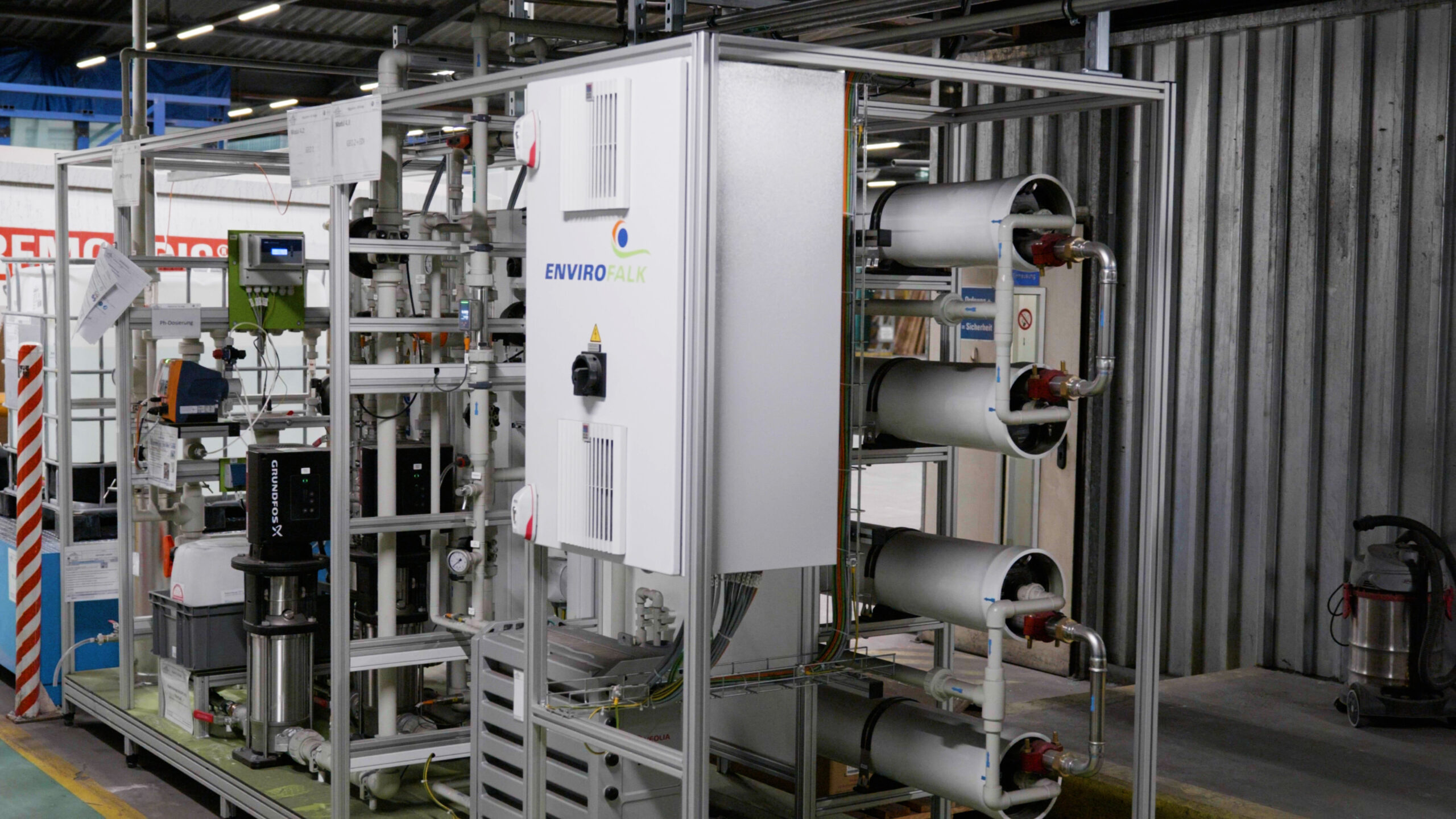
Purified-water treatment for consistently high water quality in glass coating.
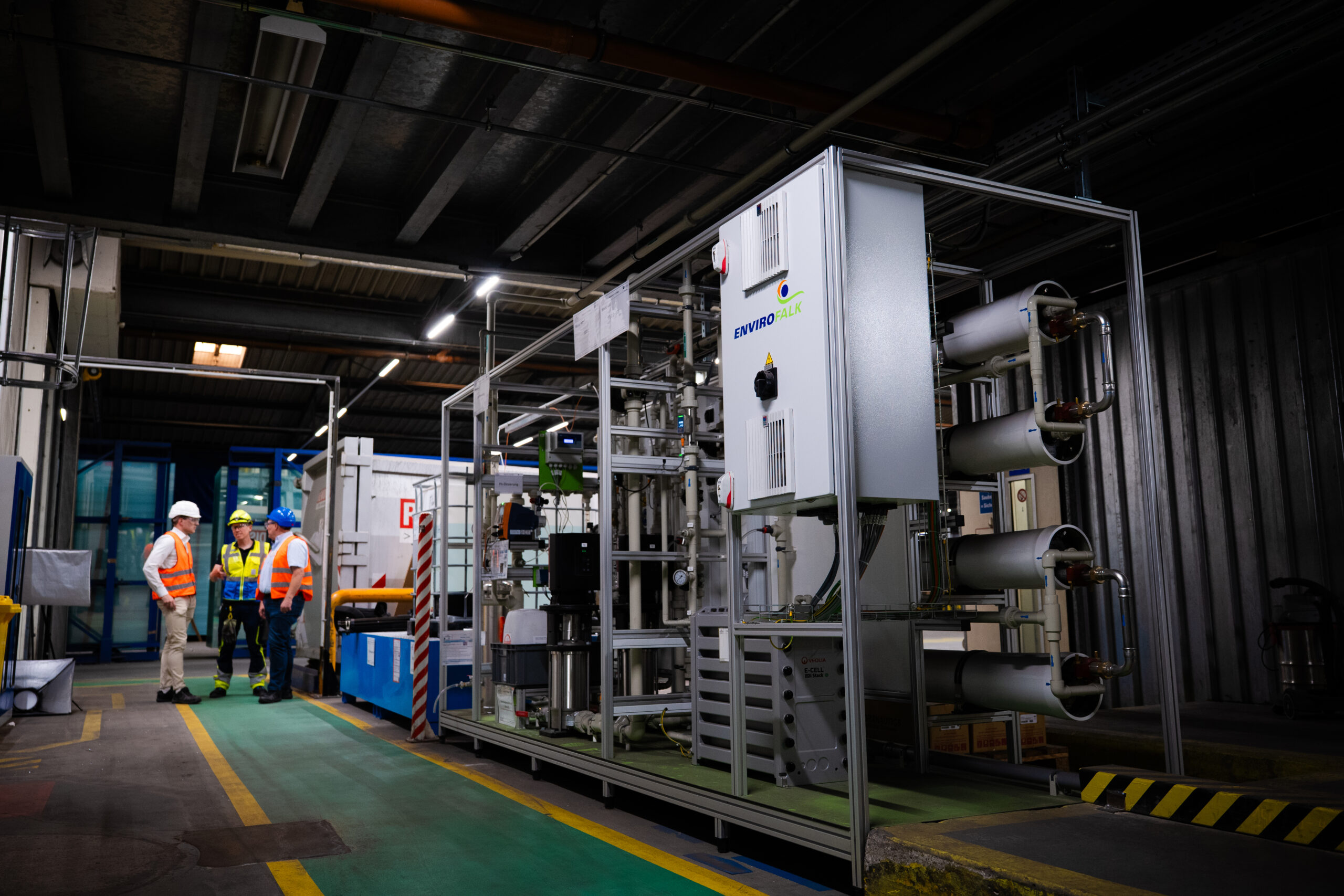
Purified-water recirculation system for maximum process stability in glass coating.
Use of purified water in glass cleaning
The purified water produced in this way is used specifically in the production process and supplied to the washing machine. During cleaning, it ensures thorough removal of contaminants from the glass surfaces, creating the essential prerequisite for a uniform, high-quality coating. At this stage of the process, water quality has a direct impact on product quality and the reject rate.
Reprocessing and recirculation
A key feature of the system concept is the consistent recirculation of process water. The wash water produced is not discarded, but undergoes multi-stage reprocessing before being returned to the process. Ultrafiltration first reliably removes particles, colloids and microbiological constituents. A two-stage reverse-osmosis process then reduces dissolved substances. The pretreated water subsequently passes through the central stages of the water-treatment system again before being returned to the washing process.
Closed-loop purified-water circulation for maximum efficiency
The targeted combination and coordination of the individual process steps creates a closed system with transparent controls. It not only guarantees stable, reproducible water quality, but also enables the transition from a linear consumption model to resource-efficient recirculation. In addition to process reliability, the concept therefore makes a significant contribution to reducing fresh-water demand and wastewater volumes, while meeting growing requirements for sustainability and cost-effectiveness in industrial production.
Transparency down to sensor level
Particular emphasis is also placed on measurement and control technology with IOLink. It enables continuous communication down to sensor level and provides advanced diagnostic and process data in real time. The objective was to create maximum transparency while ensuring stable system operation. All relevant process data is available in real time via a central dashboard. Deviations can be detected early and corrected in a targeted manner.
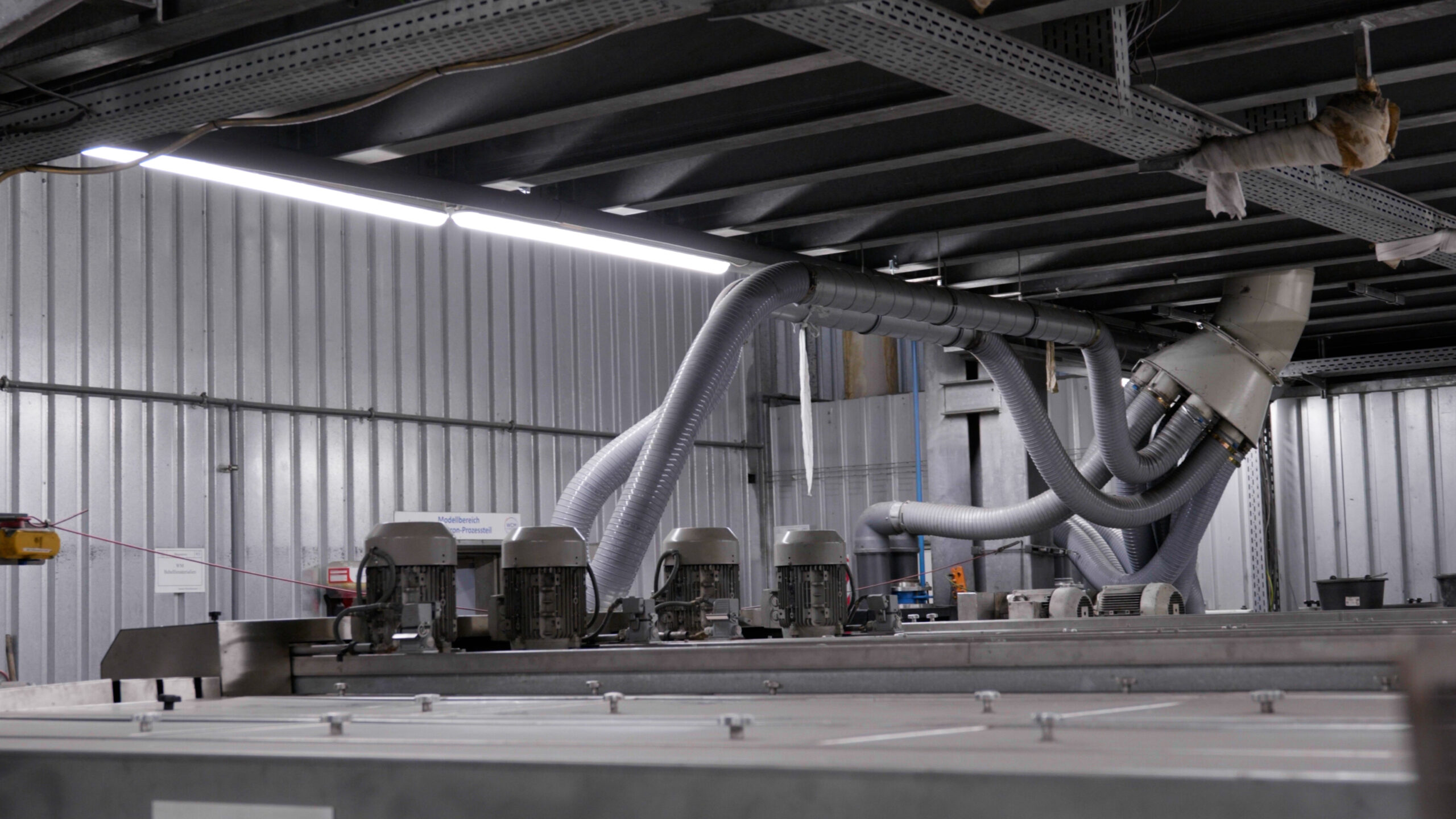
Magnetron coating lines produce functional metal layers; the quality of the water used in the upstream washing process is crucial.
David Hannappel
Application Consultant, EnviroFALK
Stable processes, increased efficiency
Not only the technical solution, but also implementation while production continued presented the project with particular challenges. Installation and commissioning had to take place within a tight time frame, placing correspondingly high demands on planning and coordination.
Through close cooperation between the EnviroFALK and Saint-Gobain Glass Germany project teams, all interfaces were defined at an early stage and precisely coordinated. This aligned approach laid the foundation for a smooth process and the successful commissioning of the purified-water recirculation system shortly before the end of the year.

Marius Bongartz
Process Engineer, SaintGobain Glass Germany
Project implementation under tight constraints
The combination of recirculation, precise control technology and continuous monitoring enables stable water quality during ongoing operation. This has a direct impact on process reliability and coating quality. At the same time, resources are used more efficiently: water consumption falls, process deviations are reduced and system operation can be optimised in a targeted manner.
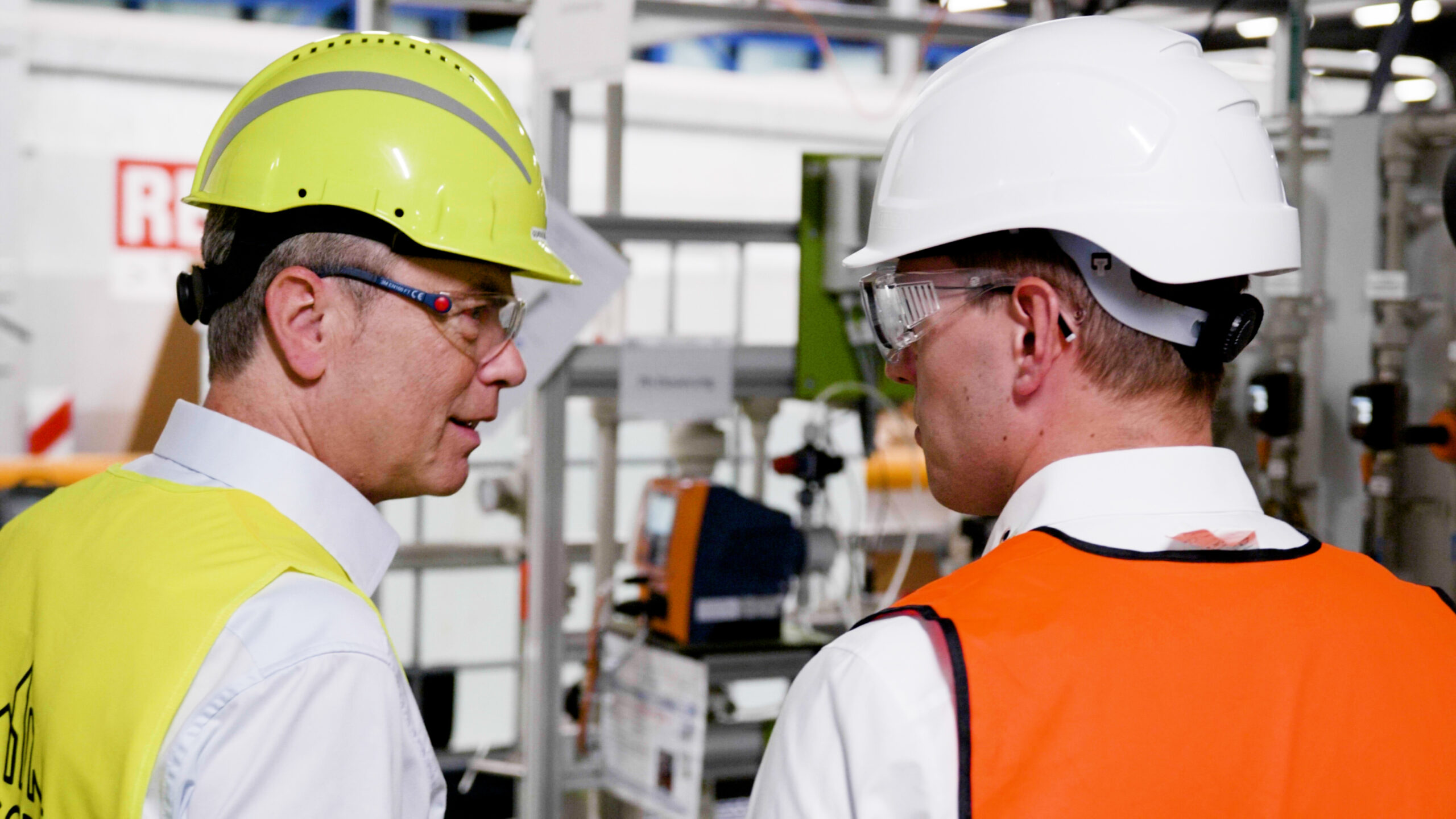
Automated processes for glass sizes of every dimension.
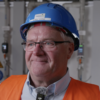
Stefan Zerfas
Project Manager, EnviroFALK
Outlook: water treatment as a strategic factor
As requirements for energy efficiency, product quality and sustainability increase, water treatment is becoming an increasingly important focus in industrial processes. In sensitive applications such as glass coating in particular, it is becoming an integral part of the production strategy.
The example at the Cologne-Porz site shows how modern purified-water recirculation systems help create transparency, conserve resources and ensure stable process conditions at the same time.
Conclusion
In glass coating, water is far more than an auxiliary medium. It is a decisive process parameter. Consistently high water quality is the prerequisite for stable processes, reproducible results and economical production. Coating quality therefore begins with water treatment.
FAQ
Consistently high water quality is crucial to the quality of the glass coating. Even minor contamination or fluctuations can impair the coating’s adhesion and optical properties. High-quality purified water is therefore an important process parameter, particularly when cleaning the glass before coating.
At Saint-Gobain Glass Germany, purified-water treatment takes place in several coordinated process stages. These include filtration, softening, reverse osmosis (RO) and electrodeionisation (EDI). Subsequent storage with UV disinfection supports the microbiological stability of the purified water.
The treated purified water is supplied to the washing machine and used to clean the glass surfaces thoroughly. Clean surfaces are an essential prerequisite for a uniform, high-quality coating. Water quality therefore directly influences product quality and the reject rate.
Water generated during the washing process can be treated and then returned to the process. At the Saint-Gobain plant, ultrafiltration and two-stage reverse osmosis are among the methods used for this purpose. The water then passes through the central water-treatment stages again.
Closed-loop purified-water circulation enables stable, reproducible water quality while reducing both fresh-water demand and the volume of wastewater generated. This combines process reliability, resource efficiency and cost-effectiveness.
In Saint-Gobain’s purified-water recirculation system, relevant process data is recorded centrally and made available in real time. Measurement and control technology with IO-Link enables data to be evaluated down to sensor level. This allows deviations to be detected early and corrected in a targeted manner.
The system combines various industrial water-treatment processes. These include filtration, softening, reverse osmosis (RO), electrodeionisation (EDI), UV disinfection and ultrafiltration. The individual processes are coordinated and form part of a closed purified-water loop.
Reprocessing and recirculating process water can reduce both fresh-water demand and wastewater volumes. At the same time, consistently high water quality ensures stable production conditions, supporting resource-efficient and economical glass production.
 powered by